
Last night marked the conclusion of our Sociology of Education course with a mini-academic conference, bringing together a cohort of brilliant learners who have journeyed throughout the course. The atmosphere was filled with intellectual curiosity as we grappled with the challenging questions surrounding social inequalities, globalization, and the pivotal role of education.
Our exploration began with broader comparative cases in globalization, delving into the intricate dynamics between educational reforms, political institutions, and the pursuit of legitimate global nation-state status. The first presentation specifically examined English language learning reforms in the cases of Japan, China, and Korea. This insightful analysis connected these reforms to historical and political contexts, offering valuable insights into how countries adopt and promote educational reforms while implementing them differently, influenced by their respective political institutions. The second presentation involved a comparative analysis between China and Sweden, exploring isomorphism related to quality education reforms. This analysis highlighted instances where certain initiatives, such as music education in China, are included in policies but lack proper funding or planning for effective implementation in practice.

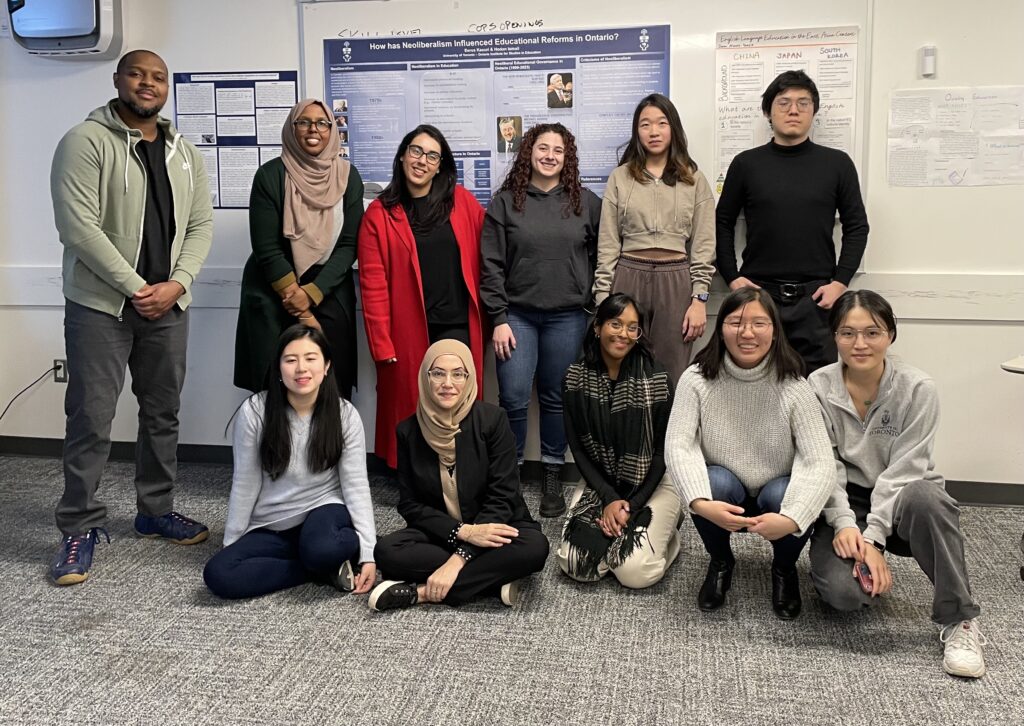
Another compelling presentation delved into the complex connections between political ideologies and educational reforms throughout history. The speakers adeptly traced the impact of neoliberalism on Ontario’s educational priorities under different regimes, emphasizing the nuanced understanding required to navigate these influences globally.
Shifting gears, a thought-provoking talk explored the challenges posed by market-oriented policies in education, placing a spotlight on the phenomenon of globalization. This speaker raised compelling questions about whether education can genuinely function as a public good while accommodating elements like competition, standardized testing, and accountability within the context of a globalized world.
The mini-conference not only provided valuable insights into how today’s learners perceive the role of education in perpetuating inequality in society but also emphasized the importance each participant places on incorporating diverse perspectives into policies and practices in a global world. This dynamic exchange highlighted the significance of promoting inclusive approaches to education and ensuring an equitable learning experience for everyone involved.